1,1,2,2-Tetrachloroethane, also known as s-tetrachloroethane, acetylene tetrachloride, or sym-tetrachloroethane, is a chlorinated hydrocarbon derived from the reaction of acetylene and chlorine.
It has the molecular formula C₂H₂Cl₄ and a molecular weight of 167.85 g/mol.
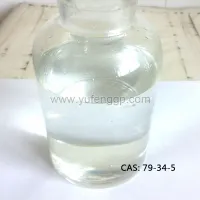
1,1,2,2-Tetrachloroethane is a non-flammable, non-explosive, colorless, and transparent liquid with a strong odor similar to chloroform. It has a boiling point of 146.3°C and a melting point of −42.5°C.
This compound is miscible with most organic solvents such as alcohol, ether, petroleum ether, halogenated hydrocarbons, and carbon disulfide, and is known for having the strongest dissolving power among chlorinated hydrocarbons.
It can dissolve a wide range of organic substances, including lipids, waxes, asphalt, coal tar, camphor, rubber, dyes, ethyl cellulose, nitrocellulose, and polyvinyl chloride (PVC). It can also dissolve several inorganic substances such as sulfur, phosphorus, halogens, and sodium sulfite.
At 120°C, 100 g of 1,1,2,2-tetrachloroethane can dissolve approximately 100 g of sulfur, demonstrating its high solvation capability.
The compound is slightly soluble in water, with a solubility of 0.29% (by mass) at 25°C, while the solubility of water in 1,1,2,2-tetrachloroethane is about 0.13% under the same conditions. It forms an azeotrope with water at 93.2°C, containing 68.9% 1,1,2,2-tetrachloroethane and 31.1% water.
Toxicity and Occupational Limit
The toxicity profile of 1,1,2,2-tetrachloroethane is similar to that of chloroform. In China, the permissible concentration in workplace air is specified as 5 × 10⁻⁶ (volume fraction).
Stability and Decomposition
Impure material readily decomposes to hydrogen chloride and trichloroethylene, whereas the pure compound is relatively stable when kept free of air, moisture, and light. However, it is prone to decomposition under certain conditions: in the presence of alkali it can be converted to trichloroethylene; contact with air can lead to slow elimination of hydrogen chloride with formation of trichloroethylene and trace amounts of phosgene; and exposure to moisture results in gradual decomposition with release of hydrogen chloride.
Photochemical and Chlorination Reactions
Under ultraviolet irradiation in the presence of air or oxygen, 1,1,2,2-tetrachloroethane can be oxidatively transformed to dichloroacetyl chloride. While it does not react with chlorine at ambient temperature, chlorination under UV light can occur, producing hexachloroethane.
Reduction and Base-Induced Reactions
Treatment with reducing metals (e.g., iron, aluminum, or zinc) in boiling water or steam reduces the compound to 1,2-dichloroethylene. Notably, heating 1,1,2,2-tetrachloroethane in the presence of a strong base can generate dichloroacetylene, a highly explosive species; appropriate precautions must be observed to avoid base-promoted decomposition.
Synthesis overview:
1,1,2,2‑Tetrachloroethane is produced by the addition of chlorine to acetylene. Because direct gas‑phase reaction between acetylene and chlorine can be explosive, the reaction is conducted with 1,1,2,2‑tetrachloroethane itself acting as the reaction solvent.
Catalysts and operation:
Typical catalysts include antimony pentachloride (SbCl₅) or ferric chloride (FeCl₃). When using ferric chloride, dry acetylene and chlorine gases are continuously fed into the tetrachloroethane solvent maintained under reflux and reduced pressure. The exothermic heat of reaction is removed by controlled evaporation of the solvent and condensed back via the reflux condenser, which helps maintain safe reaction temperatures and steady conversion.
Yield:
Under these controlled conditions, the process achieves an approximate 97% yield based on acetylene.
Safety note:
Because of the flammability and reactivity of the gaseous reagents and the potential for hazardous by‑products, industrial production requires strict process controls, inerting, effective condensation/reflux systems, and appropriate safety measures.
1,1,2,2‑Tetrachloroethane cas79-34-5 is primarily used as an intermediate in the production of trichloroethylene, tetrachloroethylene, pentachloroethane, and hexachloroethane.
As a nonflammable solvent, it is capable of dissolving substances such as shellac, resins, waxes, and other organic materials. However, its high toxicity and susceptibility to hydrolysis limit widespread applications in consumer products.
Beyond its role as a solvent, 1,1,2,2‑tetrachloroethane is also employed in the manufacture of metal detergents, paint removers, insecticides, herbicides, alcohol denaturants, and similar chemical products, making it a versatile intermediate in industrial chemistry.


Comments
Please Join Us to post.
0